How a family-run empire stretched from Russian music television to European medical cannabis — through offshore companies, dormant subsidiaries, and one profitable Balkan outlier
This article launches our investigation into how Russian money has infiltrated the European cannabis market.
Vadim Soiref’s business network spans Russia, Ukraine, Poland, Gibraltar, Malta, Estonia, Spain, and the Netherlands. Publicly, it presents itself as an international media and cannabis enterprise. But corporate records tell a more uneven story: one profitable production asset, a ring of weak or inactive companies, opaque offshore structures, and a pattern of gaps between branding and verifiable substance.
For years, Vadim Soiref operated largely out of public view. Born in Moscow in 1958, according to corporate filings, he first built his name around the Music Box brand, a television and media network that took root in Ukraine, Russia, and later Poland. Over time, Soiref and his family expanded into a second, more lucrative frontier: medical cannabis. That business now sits under Phcann International B.V., a Dutch holding company with subsidiaries across Europe.
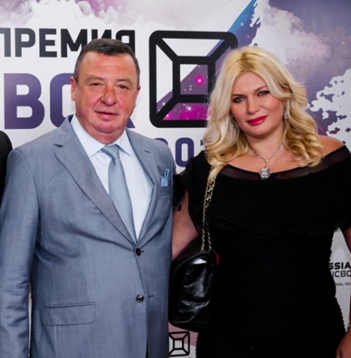
Vadim Soiref and Eva Soiref
On the surface, it looks like the story of a businessman who successfully pivoted from entertainment to pharmaceuticals. But a review of public records across multiple jurisdictions points to a more complicated picture. The cannabis group appears to be anchored by a single successful operation in North Macedonia, while other subsidiaries report losses, show little sign of real activity, or have stopped disclosing current financial data altogether. Alongside those operating companies sits a network of family-linked offshore entities in Gibraltar, Malta, and Estonia, some of which appear to have little or no commercial substance.
The wider corporate architecture raises additional questions. The Dutch cannabis holding traces back to a real-estate-linked ownership chain connected until late 2024 to the troubled Adler Group, which has faced years of scrutiny over alleged accounting irregularities and governance failures. Soiref’s media interests, meanwhile, continue to span Russia, Ukraine, and Poland — a striking alignment in the middle of Europe’s sharpest geopolitical rupture. There is no public evidence proving criminal wrongdoing by Soiref or his core companies. But the pattern that emerges from filings, registry extracts, and financial statements is one investigators and compliance teams would recognize immediately: a cross-border business empire heavy on branding, thin on transparency, and full of structural red flags.
A Media Business Across a War Divide
Soiref’s earliest visible business footprint lies in television.
In Russia, he is linked to OOO Myuzik Boks Media, a Moscow-based company tied to the Music Box brand. The company is partly owned by Music Box Group Sp. z o.o. in Poland and is closely associated with Natalya Palinova, a Russian executive who appears across several connected Russian entities. Palinova is not just a manager on paper. Publicly visible social media activity suggests a close personal relationship with the Soiref family, reinforcing the impression that the Russian arm of Music Box remains embedded in a trusted inner circle.
In Ukraine, Soiref remains the beneficial owner of TOV Music Box Ukraine, a television broadcaster registered in Kyiv. But his Ukrainian media history contains stranger turns. Two other companies formerly linked to him — one previously active in media advertising, another in television broadcasting — later changed hands and abruptly switched their declared business activity to bridge and tunnel construction. Such pivots are not impossible, but they are commercially unusual. In both cases, Soiref ceased to be the beneficial owner around the time of the changes, and control passed to another Ukrainian businessman with interests in construction and industry.
In Poland, the Music Box brand sits under Music Box Group Sp. z o.o., co-owned by the Soiref family and active in audiovisual production. A new subsidiary, Music Box Entertainment, was established in late 2024 to operate free-to-air and subscription broadcasting.
Taken separately, these entities may look like regional fragments of a media brand. Taken together, they create a more sensitive picture: a family-linked media business spanning Russia, Ukraine, and Poland at a moment when those jurisdictions are politically and economically at odds. That does not by itself establish sanctions violations or improper conduct. But it creates undeniable regulatory and reputational exposure.
The Cannabis Pivot
By the 2010s, Soiref’s business interests had moved decisively into cannabis.
The family first appears in the sector through MedReleaf, a Canadian medical cannabis company that became one of the early winners of the global cannabis boom before being sold to Aurora Cannabis in 2018 in a multibillion-dollar deal. The Soiref family’s stake in MedReleaf was held through Eva Fashion Limited, a Gibraltar company owned by Vadim Soiref. Public records show that Eva Fashion was a minority investor, not a controlling shareholder, and there is no evidence that Vadim Soiref or his son Yuval held executive or governance roles inside MedReleaf itself.
That distinction matters because MedReleaf later became a central part of the family’s public cannabis narrative.
The main European platform is now Phcann International B.V., a Dutch holding company controlling subsidiaries in North Macedonia, Poland, Germany, Croatia, and Spain. Public-facing materials and event sponsorships have portrayed the group as a major international cannabis player. But the underlying corporate record suggests something narrower: a structure centered on one functioning Balkan production facility, surrounded by weaker peripheral entities.
A Multinational in Name, a Single Asset in Practice
The strongest asset in the network is NYSK Holdings DOOEL Skopje, a North Macedonian producer of medical cannabis.

NYSK holds EU-GMP certification and operates a visible production facility near Skopje. Financial data suggests it is the group’s only real engine of growth. Revenues rose sharply from 2022 to 2024, making it the standout performer in the Soiref cannabis structure and the only subsidiary that appears both operationally credible and financially viable.
That success, however, only throws the weakness of the wider group into sharper relief.
PharmaCann Polska, one of the group’s earliest Central European vehicles, has not published financial statements since 2019. In the last available year, it showed substantial assets and liabilities but generated minimal revenue while posting a heavy loss. It still holds a valid EU-GMP certificate and has been linked to product agreements, but the reporting gap leaves basic questions unanswered about its actual operating condition.
PharmaCann Deutschland AG appears more active commercially, with regulatory presence, product listings, and industry-event participation. Yet its accounts show repeated annual losses and steadily worsening negative equity. The absence of newer financial statements intensifies uncertainty rather than resolving it.
PharmaCann Adria in Croatia appears weaker still. Public traces of activity are minimal. It has no meaningful revenue, no visible operational footprint, no GMP certification, and a deeply negative capital position. The company looks less like a functioning business than a placeholder within a wider corporate map.
Even NYSK’s story contains oddities. The company acquired Mega Panel Mrsevci, an electricity producer with no recent revenue and continuing losses. Public records do not explain what strategic logic connects a successful medical cannabis producer to an unprofitable energy business.
Taken together, the pattern is stark: remove NYSK, and much of the Soiref cannabis empire begins to look hollow.
The Dutch Holding and the Adler Shadow
The group’s ownership structure adds another layer of risk.
Phcann International B.V. did not begin life as a cannabis company. It was originally incorporated under a different name as part of a real-estate-related structure. The company remained formally owned by Brack Capital entities, and Brack in turn was tied until late 2024 to the troubled Adler Group.
Adler has been engulfed in controversy for years. The group has faced accusations involving inflated property valuations, accounting irregularities, project delays, governance failures, and severe financial distress. There is no direct public evidence linking those controversies to Soiref personally or to Phcann’s cannabis operations. But the historical ownership chain still matters. A holding company promoted as the center of a pharmaceutical cannabis platform sits inside a corporate lineage shaped by one of Europe’s more scandal-ridden real estate groups.
That is not merely a reputational footnote. It raises questions about transparency, control, structural resilience, and whether investors or counterparties are being shown the full picture.
The repeated rebranding of the company compounds those concerns. A real-estate-linked Dutch entity was later renamed, repurposed, and presented as a cannabis holding. Such pivots can be lawful and commercially rational. But when combined with formal ownership that appears disconnected from day-to-day operational control, they can also signal opacity.
A Brand Borrowed From Elsewhere
The Soiref cannabis network also carries a branding risk hiding in plain sight.
Across Europe, the group has used the PharmaCann name — a name already associated with a major U.S.-based cannabis company. No confirmed corporate connection between the two has been established in the available material. In a fast-moving and highly regulated sector, adopting a name so close to an existing player invites obvious legal and reputational questions.
It also fits a wider pattern in the Soiref network: strong international branding, thinner corporate fundamentals.
Public-facing narratives routinely describe the group as a “leading multinational pharmaceutical cannabis company.” Sponsorships and conference appearances reinforce that image. But the filings underneath show missing accounts, dormant subsidiaries, negative equity, no-employees holding structures, and unclear operational substance in several jurisdictions.
The Offshore Family Network
The Soiref family’s corporate presence extends well beyond the operating businesses.
In Gibraltar, Eva Fashion Limited served as a private investment vehicle and was previously a major shareholder in both MedReleaf and PharmaCann Polska. In Malta, Vadim and Eva Soiref co-own Eva Charter Limited, a company whose earlier ownership involved a fiduciary services provider. In Estonia, the family is tied to Eva4eva Investment OU, a real-estate company that appears to have had virtually no economic life since its incorporation.
Eva4eva’s accounts show no net sales, no real profit or loss, and only nominal assets over multiple years. Its registered address overlaps with a cluster of other little-understood Estonian entities, and some of the people associated with it are connected to a broader network of companies sharing the same location. That does not prove hidden activity. But it is consistent with a structure designed more for holding, parking, or routing assets than for visible commercial operations.
Such offshore layering is not inherently unlawful. But in a network already marked by weak disclosure, dormant companies, and multi-jurisdictional family control, it becomes another red flag.
The Family as Corporate Infrastructure
The Soiref empire is not just family-owned. It is family-operated.
Vadim Soiref’s wife, Eva Soiref, appears as co-owner, director, or board member across several entities in Poland, Gibraltar, Malta, and Estonia. His son Gal Soiref is the sole shareholder and director of Pharmacann Div Espana S.L., a Spanish company using the family’s cannabis branding but largely absent from the official public structure of the wider group.
His son Yuval Soiref has emerged as the family’s most visible cannabis promoter. On LinkedIn and in cannabis-industry media, Yuval presents himself as a founder, builder, or strategic force behind multiple ventures. But in several cases, the public record does not match the self-presentation.
For MedReleaf, Yuval has publicly framed himself as a formative figure. But corporate filings do not show him as a founder, director, or executive. The documented family connection runs through his father’s Gibraltar investment vehicle. Similar patterns appear in other ventures, where Yuval’s claims of founding or leadership roles are only partially reflected, or not reflected at all, in corporate records.
This does not make those claims false in every case. Informal strategic involvement can be real. But the repeated gap between public biography and verifiable filings raises a more general question: is Yuval functioning as the public-facing entrepreneur while formal control stays elsewhere in the family network?
Image, Influence, and Inflated Narratives
Yuval’s recent ventures illustrate how image-making has become part of the family’s business strategy.
Media coverage around Green Success, one of Yuval’s more recent cannabis ventures linked to Gibraltar and Malta, has portrayed him as a visionary reshaping global medical cannabis infrastructure. Some of that coverage appears in cannabis-friendly outlets whose tone reads less like independent reporting and more like promotional storytelling.
That matters because the underlying businesses often appear early-stage, thinly documented, or hard to verify at scale. Grand narratives about global reach, premium cannabis brands, and industry transformation sit alongside structures that seem built around holding companies, brand vehicles, and market positioning rather than large, transparent operating businesses.
In other words, the Soiref network has not only built companies. It has also built a story about itself.
Smear Material and the Problem of Verification
There is no shortage of online allegations against Vadim Soiref.
Anonymous Telegram channels and secondary outlets have accused him of fraud, forgery, sanctions circumvention, and covert financial schemes. Some of these accusations are dramatic and detailed. But many originate from sources with a record of publishing paid attack material, unverified leaks, or reputation-targeted campaigns.
In at least some cases, open-source records do not clearly support the most sensational claims. That does not exonerate Soiref. It means something narrower and more important for investigators: the evidentiary value of much of this material is weak.
Still, even low-credibility attack content can shape reputational risk. It becomes part of the environment in which banks, partners, regulators, and journalists assess a business figure. And in Soiref’s case, the smear ecosystem feeds off real structural weaknesses already visible in the public record: opacity, family concentration, offshore layering, loss-making subsidiaries, and reporting gaps.
What the Records Actually Show
There is no single document that blows the Soiref network open.
No registry extract proves a sanctions scheme. No filing alone establishes fraud. No open-source record definitively shows criminal conduct by Vadim Soiref or his family.
But that is not what makes this network noteworthy.
What the records do show is a business empire stretched across highly sensitive jurisdictions and sectors, supported by one profitable cannabis facility and ringed by dormant companies, offshore vehicles, missing financial disclosures, and family-controlled structures. They show a Dutch cannabis holding with roots in a real-estate ownership chain linked to Adler. They show media businesses spanning Russia, Ukraine, and Poland during wartime. They show repeated gaps between polished public narratives and the harder evidence of accounts, registries, and corporate governance.
That combination may not amount to a smoking gun. But for regulators, counterparties, and investigators, it is something else: a map of concentrated risk.
If you have any information about the Soirefs or the companies associated with them, please contact us at support@researchinitiative.org. Your input could greatly assist our ongoing investigation, which is far from over.
Our thanks go to the team at https://AssetTracing.com for their assistance in preparing this investigation
© 2024 ResearchInitiative.org All rights reserved. This publication may not be reproduced, distributed, or transmitted in any form or by any means, including photocopying, recording, or other electronic or mechanical methods, without the prior written permission of the ResearchInitiative, except in the case of brief quotations embodied in critical reviews and certain other non-commercial uses permitted by copyright law.